
First trip
Six things,
in order.
Glamis is not complicated to visit, but it is unforgiving about the things people skip. This is the short version of everything else on this site, arranged the way you actually need it: before you book, before you pack, and before you ride.
Do these in this order
Before you tow
You may not need a permit
Permits apply October 1 through April 15 only. In season, buy in advance at $55 rather than $70 on site. The fee covers your primary street-legal vehicle, not each machine. Permits →
Then check it again
Highs pass 110F for much of the year and there is no shade. The tile above shows today. If it reads Extreme, that is not a style choice. Safety →
Every vehicle, before you leave home
6 by 12 inch red or orange flag, whip 8 feet from the ground, flag within 10 inches of the tip. Helmets for everyone on an ATV. Sound capped at 96 dBA. Rules →
California or Arizona
You arrive via Brawley or via Yuma, and the pump price difference across that state line is usually substantial. Budget the tow rig and the machines separately. Live prices →
Water, shade, fuel, waste
Nothing is provided on the sand. You bring water, you bring your own shade, and everything you bring in leaves with you. Camping →
While you still have signal
Do not count on coverage. Store maps before you leave the highway and note which access road you came in on. Maps and access →
Once you are there
The mistakes
that are easy to avoid.
Arrive earlier than feels necessary. Nothing is reserved. On a busy weekend the ground you wanted is gone well before you expected, and on a holiday weekend that gap is measured in hours, not minutes.
Do not ride alone on a first visit. Forty miles of open sand with few reference points makes distance genuinely hard to judge, and a breakdown a long way out is a different kind of problem here than it is somewhere with landmarks and phone signal.
Slow down in camp. Under 15 mph within 50 feet of camps, people or animals. Most incidents involving people who were not even riding happen around camp rather than out on the terrain.
Treat the crest as blind. You cannot see what is coming up the far side of a dune. Approach expecting something to be there, and leave yourself room to change line.
The thing nobody tells you first
Let the air out
of your tires.
More first trips are ruined by tire pressure than by anything else. A tire at highway pressure is narrow and cuts down into soft sand. Let air out and the same tire spreads into a longer, wider footprint that floats on top instead of digging in. It is the difference between driving out under your own power and spending the night with a shovel.
This applies to the tow rig, not just the toys. People get a truck badly stuck within sight of the highway on the first afternoon, and airing down is usually what would have prevented it and what eventually frees it.
- Air down before you leave pavement, not after you are stuck. Digging first and airing down second is the hard way round.
- Go gradually and check with a gauge. There is no single correct number: it depends on the vehicle, its weight and the tire, so ask someone who runs your setup rather than copying a figure off the internet.
- Drive gently once you are down. Low pressure makes a tire easier to roll off the rim, so hard turns and sharp throttle are what you avoid.
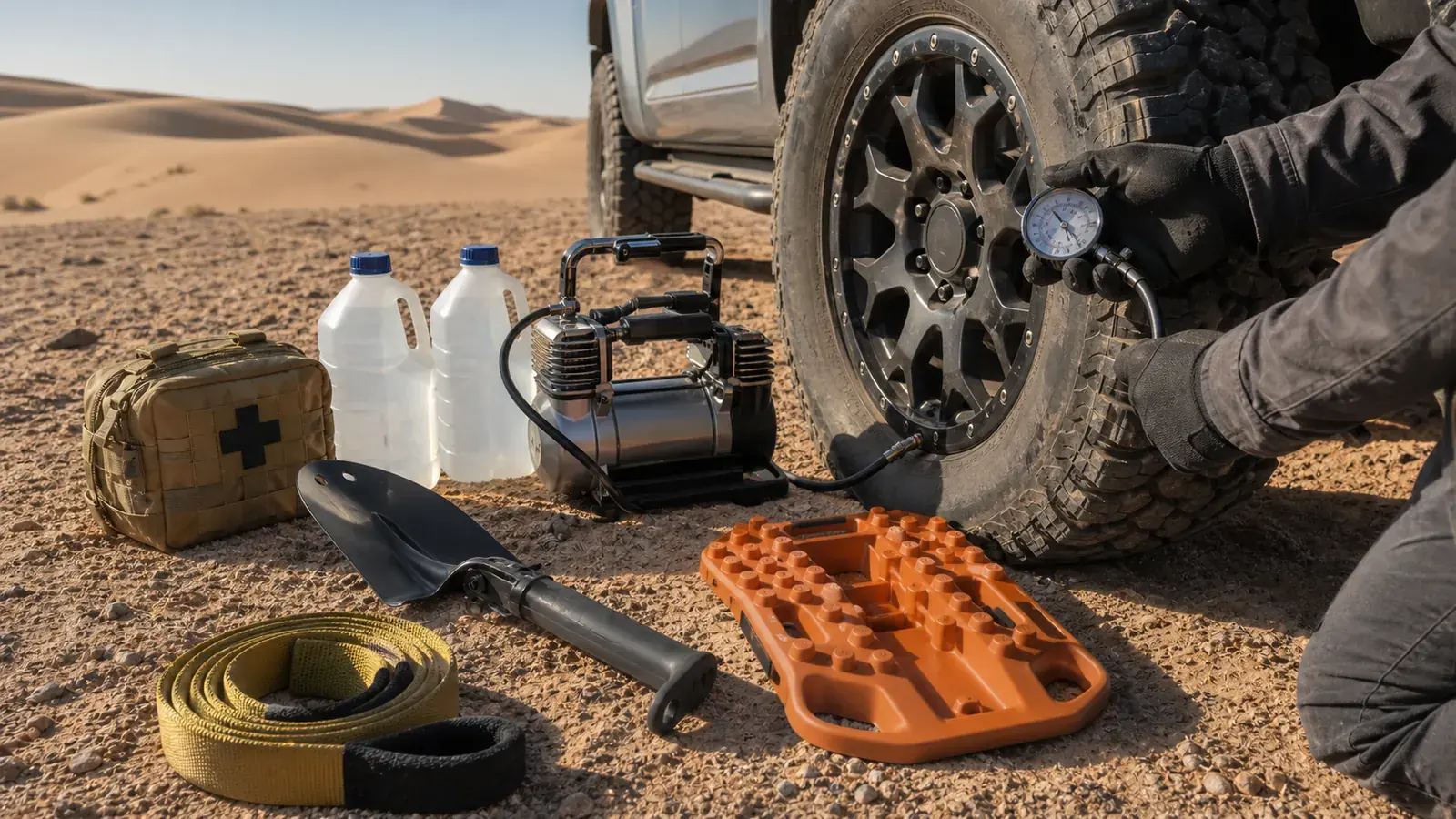
- Carry a way to put the air back. A compressor is the standard answer. Without one, airing down is a one-way trip.
- Air back up before you drive on the highway. Soft tires at road speed build heat and fail, and this is a place where the drive home is long and hot.
Carry the rest of the recovery kit while you are at it: a shovel, a tow strap, a tire gauge, basic tools, water and a light. A machine buried at four in the afternoon in November is an inconvenience. The same machine buried in the heat, a long way out, with no water and no way to reinflate, is the situation the safety page is about.
Being straight with you
What is missing
from this page.
Everything above is either published by BLM or general to riding open dunes. What a first-timer most wants is the part that only regulars can give: which specific areas to start in, which to leave alone until you have some sand time, how early is early enough on a holiday week, and what people wrongly believe before their first trip.
That is being gathered from riders who actually know this place, and this page will carry it when it lands. We would rather leave a gap here than fill it with something that sounds right and is not.