
The Glamis Dune Guide
Meet Fringe
Born for moving sand.
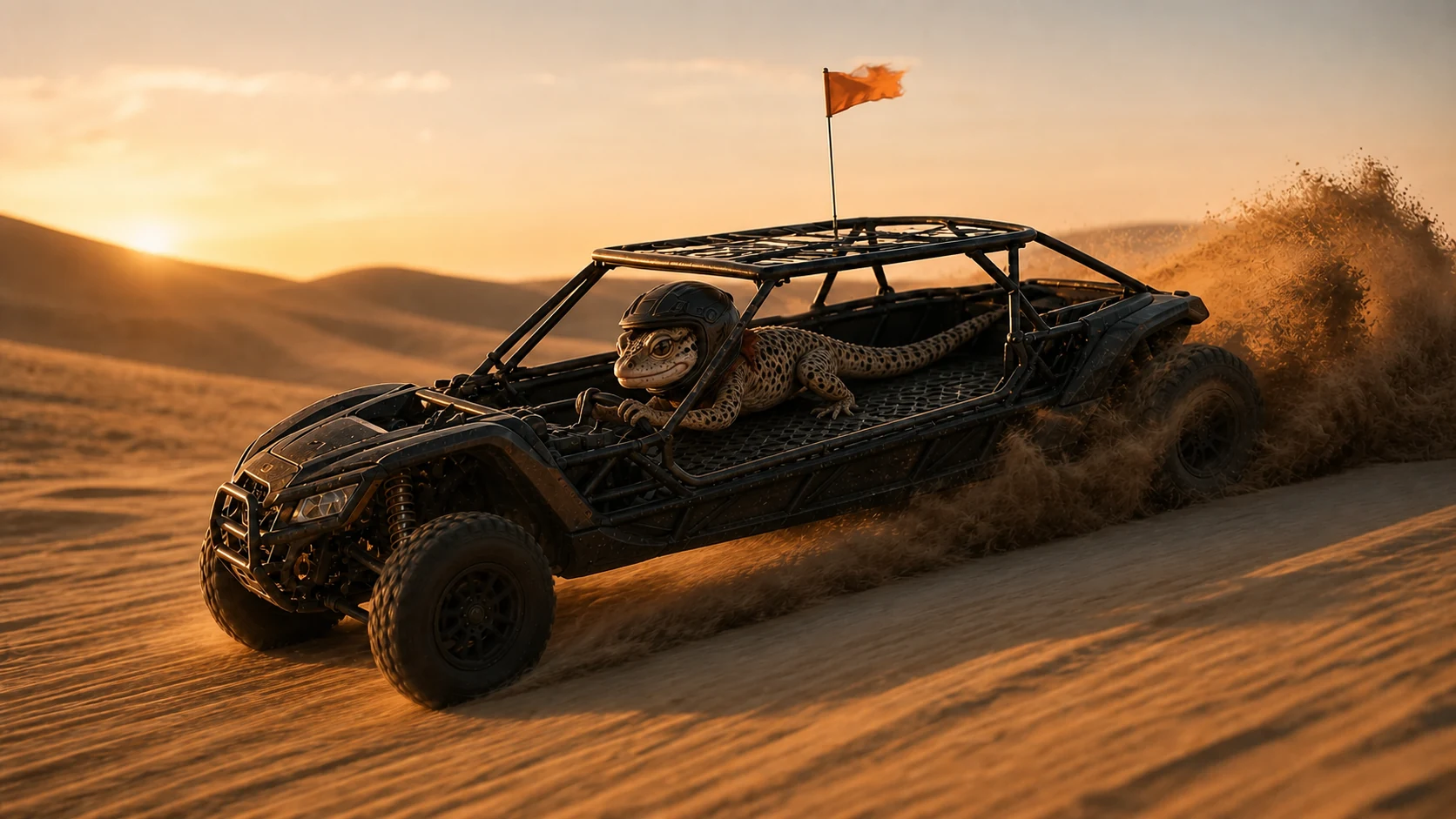
A Colorado Desert fringe-toed lizard, one of the specialized dune runners that calls the Imperial Sand Dunes home.
A REAL GLAMIS LOCAL
Small animal.
Serious dune hardware.
Fringe did not get dropped into a desert because the colors looked good. Colorado Desert fringe-toed lizards are built for this exact kind of moving sand.
Rows of specialized scales fringe his toes and help him move across loose slopes. His body stays low, his tail helps with balance, and when the surface gets too hot or a predator gets too close, he can dive beneath the sand. Glamis already had a dune runner. We just gave him a name.

BUILT FOR MOVING SAND
Fast enough to vanish.
Local enough to know where.
Fringe is quick, observant, and always one ridge ahead. That makes him a natural guide for a place where the next dune can hide a camp, another rider, or a drop you did not see coming.
His first advice is simple: read the sand before you charge into it. The second is to keep your flag high enough for everyone else to read you.
GEAR THAT FITS THE RIDER
The machine is bigger.
The safety gear is real.
When Fringe drives, the helmet goes on. His custom UTV is unmistakably larger than his full nose-to-tail body, with a low protected compartment, support for all four feet, roll-cage coverage, and clear space for his tail.
The proportions matter. Fringe is not a giant lizard sitting on a toy, and the machine is not a costume. It is a working dune rig built around the animal who has to operate it.

One little local.
A very big set of dunes.
The cinematic scenes keep Fringe true to the animal. The illustrated Dune Guide gives that personality a louder voice on shirts, gear, and around the site. Both belong to the same Glamis local.